
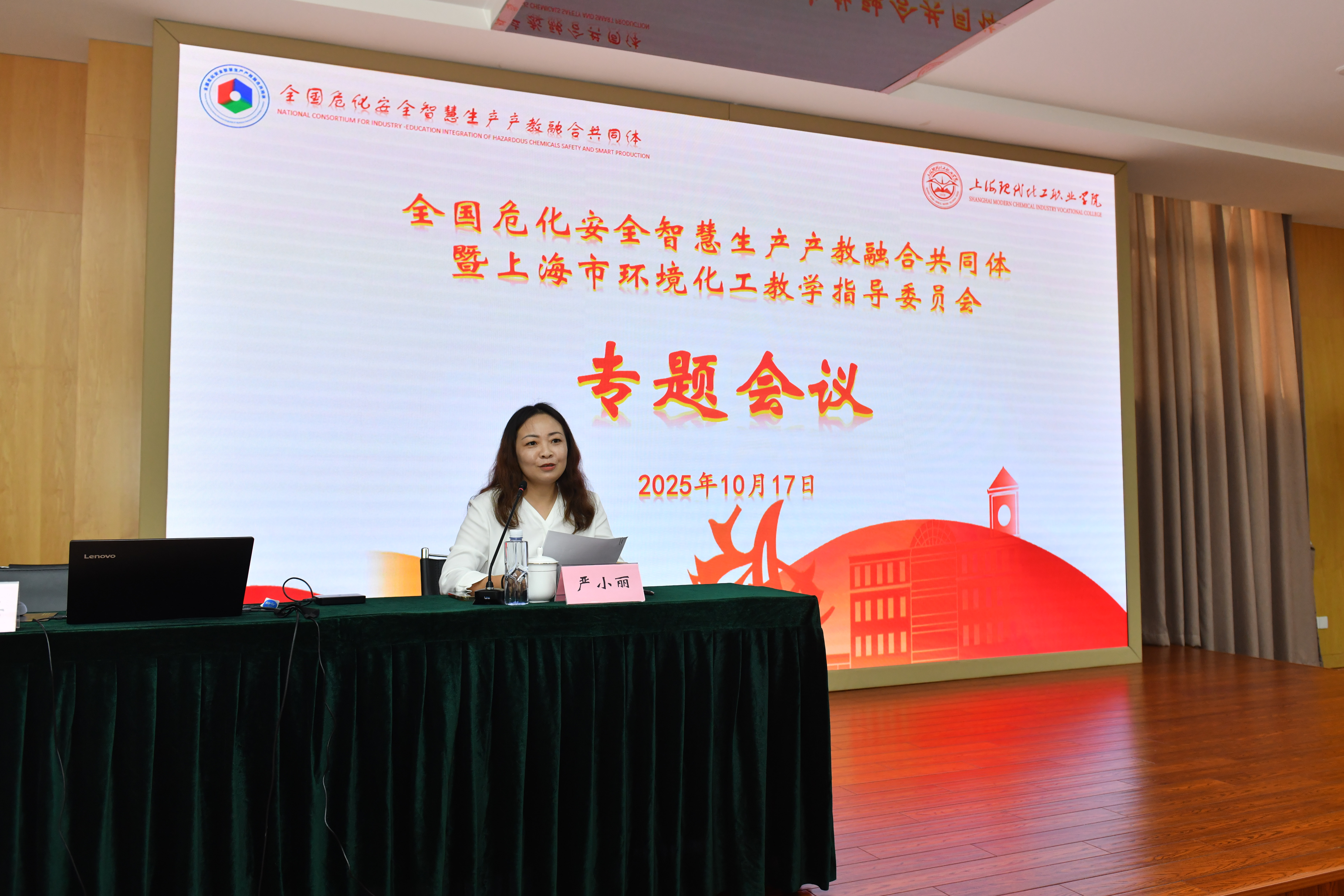
On October 17th, a thematic meeting of National Hazardous Chemicals Safety and Smart Production Industry-Education Integration Consortium and Shanghai Environmental Chemical Teaching Steering Committee was successfully held in the Multi-function Hall of our school. The meeting was held online and offline synchronously, and attracted many guests to participate, such as members of National Hazardous Chemicals Safety and Smart Production Industry-Education Integration Consortium, all members of Shanghai Environmental Chemical Teaching Steering Committee and key teachers of various schools. Yan Xiaoli, Secretary-General of the Consortium, Secretary-General of the Education Committee and Vice-President of the school, attended the meeting.
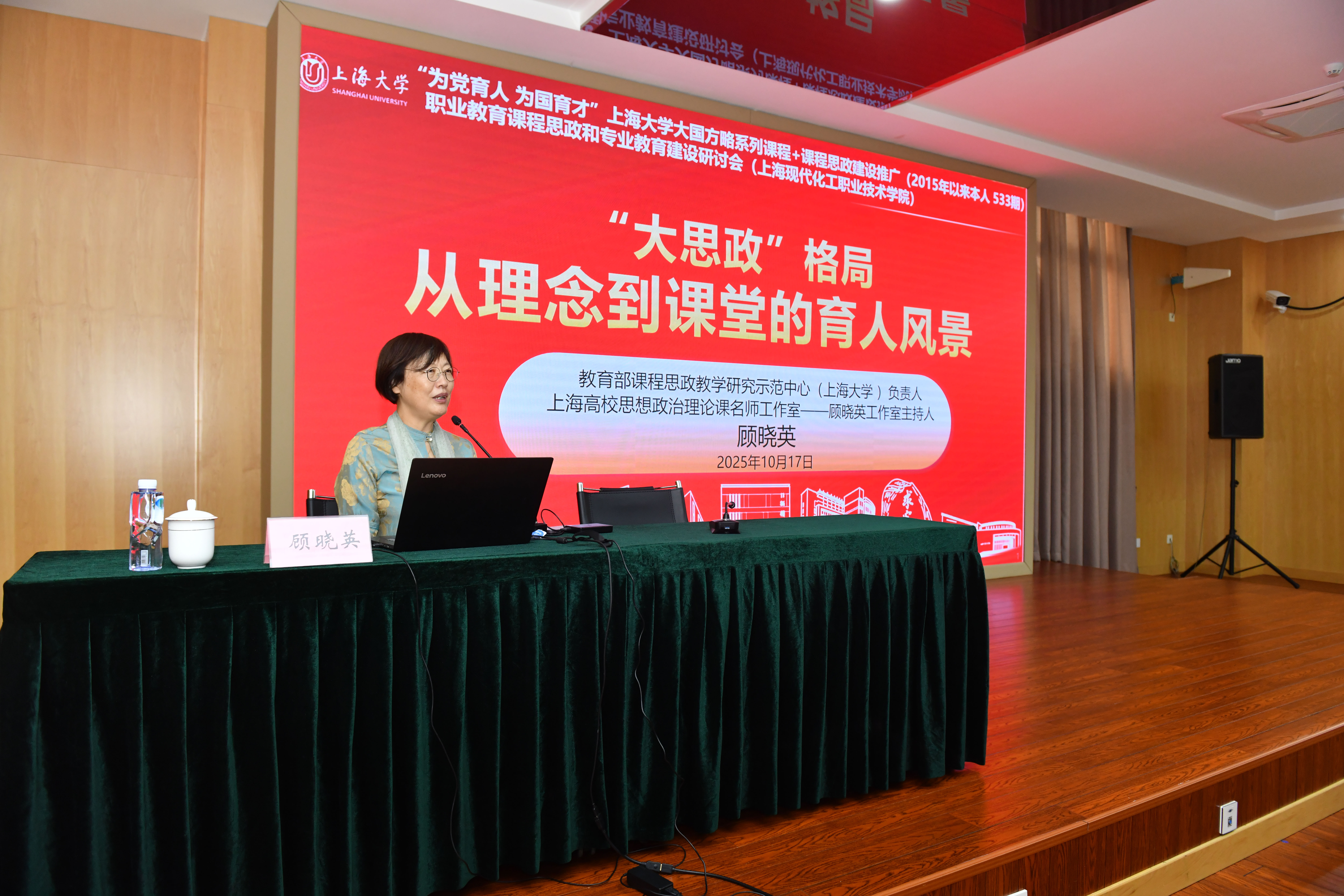
The meeting mainly includes three links: keynote lecture, case/thesis review of ideological and political education, and exchange and discussion. In the keynote lecture session, Professor Gu Xiaoying, Doctoral Supervisor and Qian Weichang Scholar of School of Marxism of Shanghai University, took the lead in giving a wonderful lecture entitled "The Pattern of 'Comprehensive Ideological and Political Education' --- From Ideas to Scenarios of Education in Classroom". Gu Xiaoying deeply analyzed the new requirements, new progress and new prospects of curriculum ideological and political construction in the new era of vocational education, and combined with cases, analyzed innovative ideas and practical paths of curriculum ideological and political education and research in Shanghai University, which provided valuable theoretical guidance and practical reference for the participants.
In case/thesis review session related to curriculum ideological and political education, Dr. Liu Yeqing from the Teaching Research Office of Shanghai Education Commission made a wonderful comment on the submitted cases and theses about curriculum ideological and political education. Dr. Liu made a comprehensive analysis from the aspects of innovation, practical effect and theoretical depth, and fully affirmed and congratulated the authors of excellent cases and theses.
Subsequently, Gao Qingping, Deputy Secretary-General of the National Petroleum and Chemical Industry Teaching Steering Committee, made a detailed interpretation of the revised version of the Teaching Standards for Vocational Education in 2025. Gao Qingping gave a comprehensive explanation from the revision background, major changes and implementation requirements of the standards, which helped the participants to accurately grasp the spiritual essence and specific requirements of the new standards and provided strong support for vocational education.
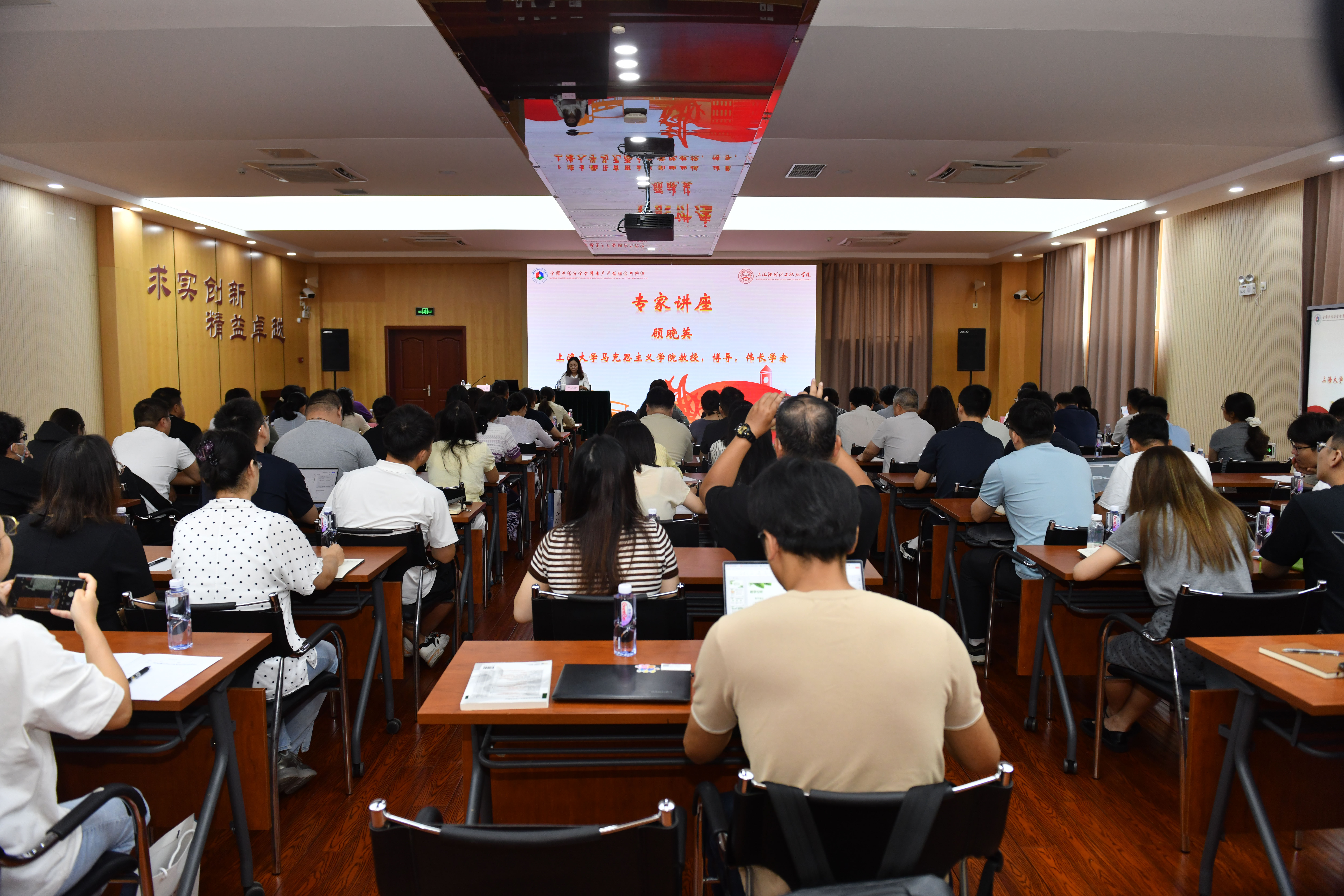
At the end of the meeting, participants conducted in-depth exchanges and discussions on issues such as ideological and political education courses and discipline construction in vocational education. Everyone agreed that through this meeting, they not only deepened understanding of the pattern of "Comprehensive Ideological and Political Education" and the teaching standards of vocational education, but also learned a lot of valuable experiences and practices, which provided useful reference and enlightenment for future teaching work.
As the initiator of the consortium and the organizer of this meeting, our school has fully played the role of a bridge and link, and built a high-level exchange platform for the member units of National Hazardous Chemicals Safety and Smart Production Industry-Education Integration Consortium and Shanghai Environmental Chemical Teaching Steering Committee. The successful convening of this meeting not only promoted exchanges and cooperation in the field of vocational education, but also injected new impetus into the development of the integration of production and education in National Hazardous Chemicals Safety and Smart Production Industry-Education Integration Consortium. In the future, the school will continue to deepen the integration of production and education, strengthen school-enterprise cooperation, promote the high-quality development of vocational education, and contribute to training more high-quality technically skilled talent.