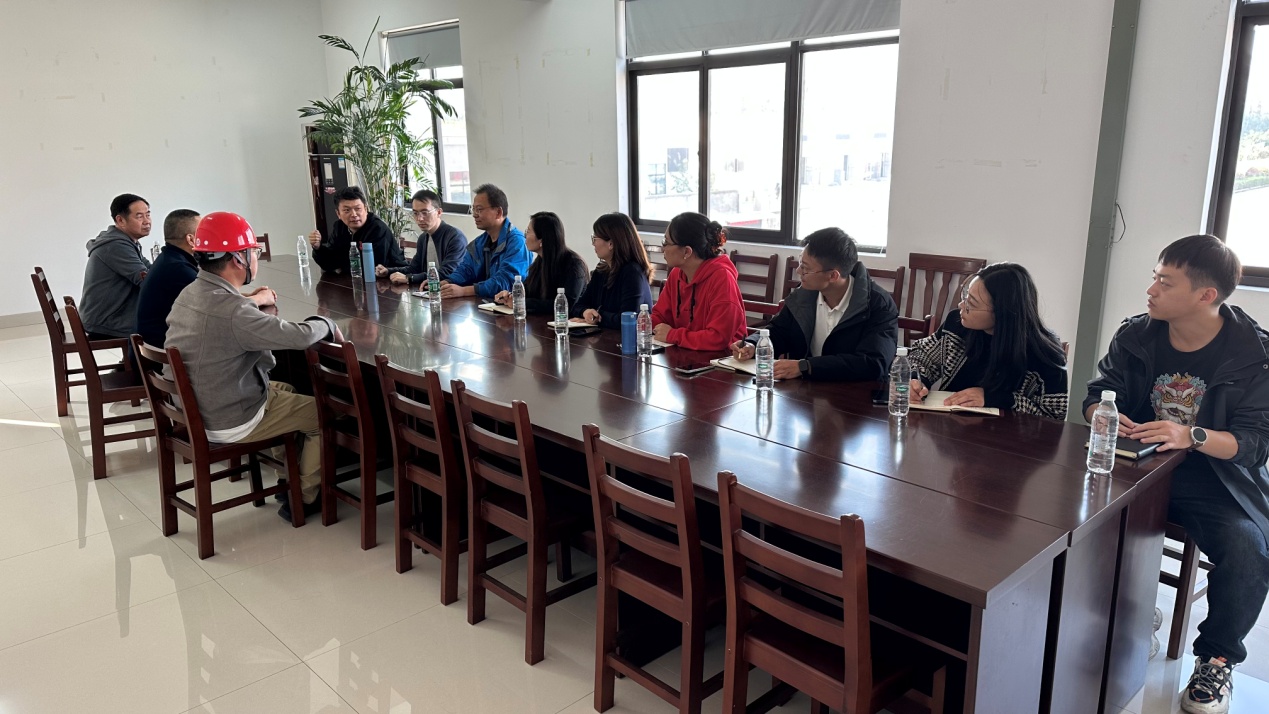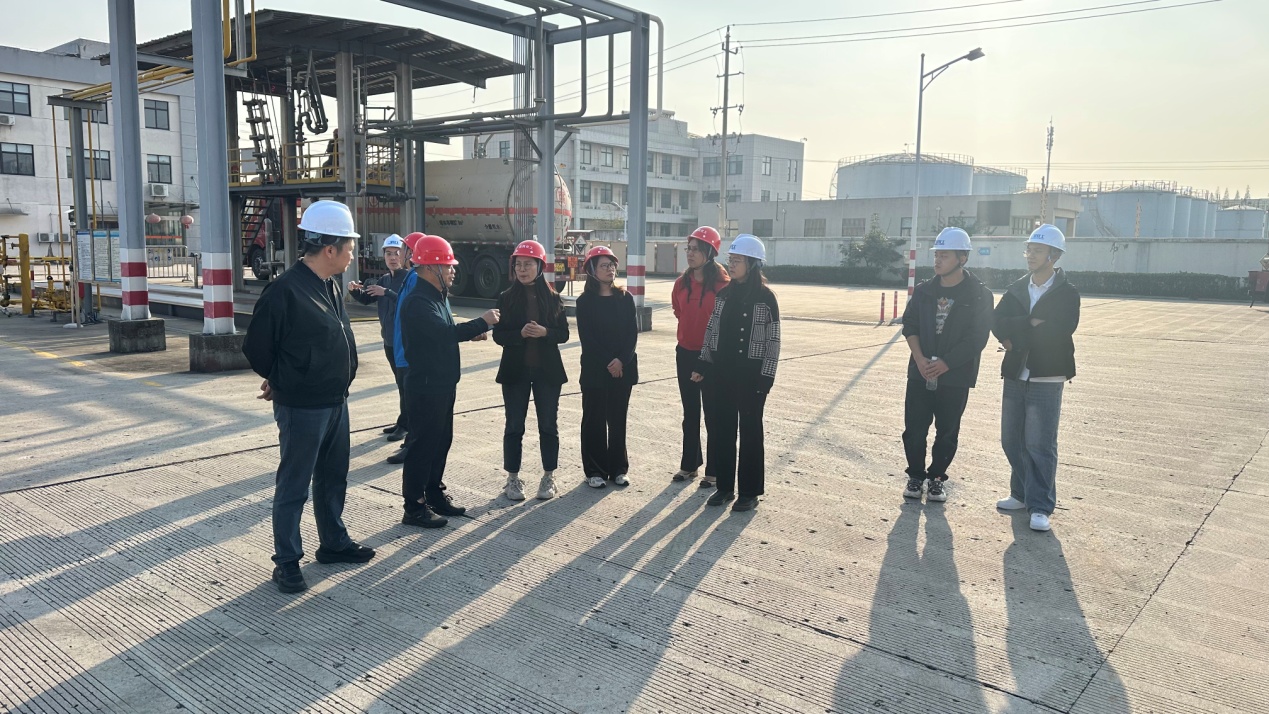
On the morning of November 13th, Zhang Haixia, Vice President of Shanghai Modern Chemical Industry Vocational College, Wu Zhenzhen, Dean of School of Public Safety and Emergency Management, and Jiang Junhua, Associate Dean, led a delegation to conduct a research trip on the construction of fire rescue discipline in Taixing Secondary Vocational School in Jiangsu Province. In the afternoon, they went into the hazardous chemicals tank plant of Taixing Yimin Chemical Co., Ltd. to conduct a "campus-industrial park" double-line research, which deeply connected personnel training with industrial demand and injected vocational education momentum into the modernization of chemical safety management in the Yangtze River Delta.
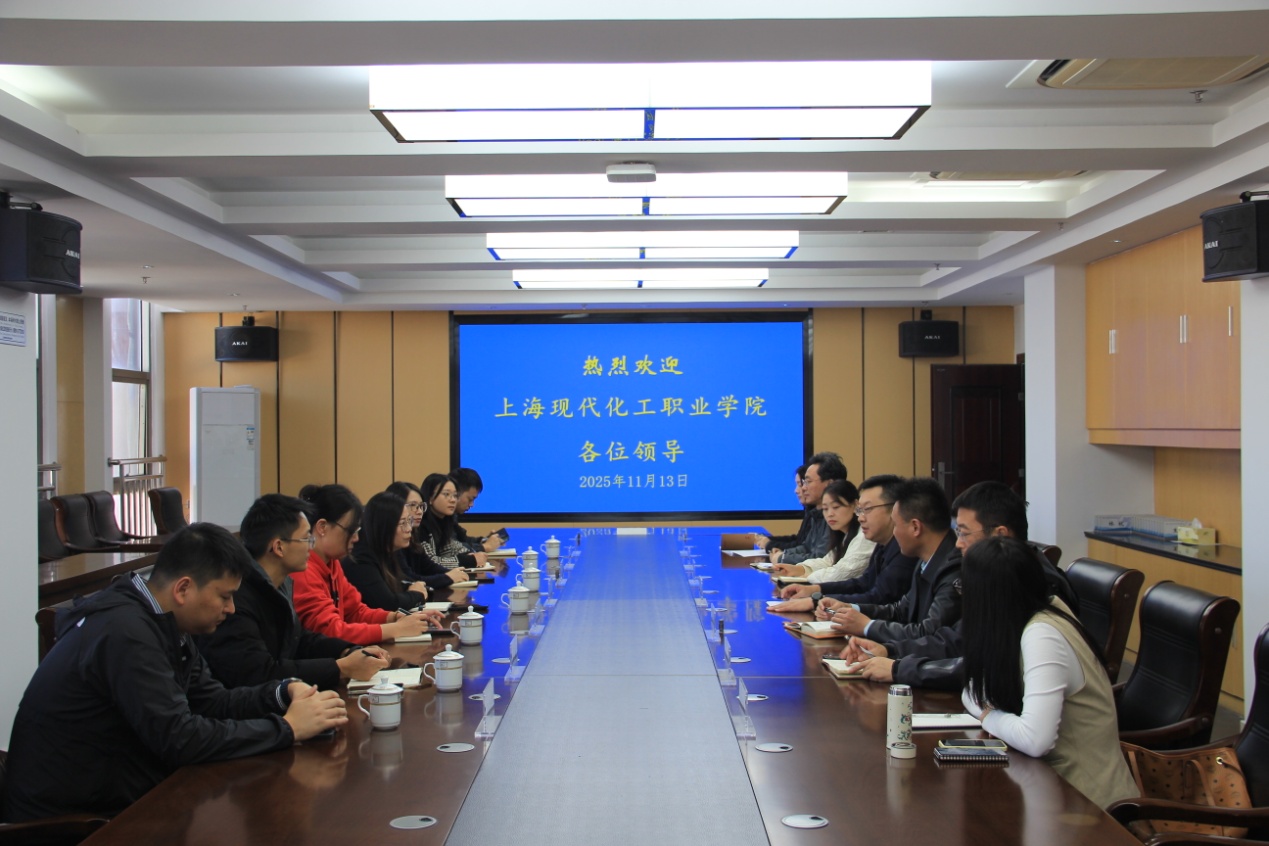
In the morning, the research team arrived at Taixing Secondary Vocational School to start special research and exchange activities. Xiao Bo, president of Taixing Secondary Vocational School, Su Hui and Yang Qiaozhen, vice presidents, and heads of relevant departments of the school and representatives of cooperative enterprises accompanied the research team.
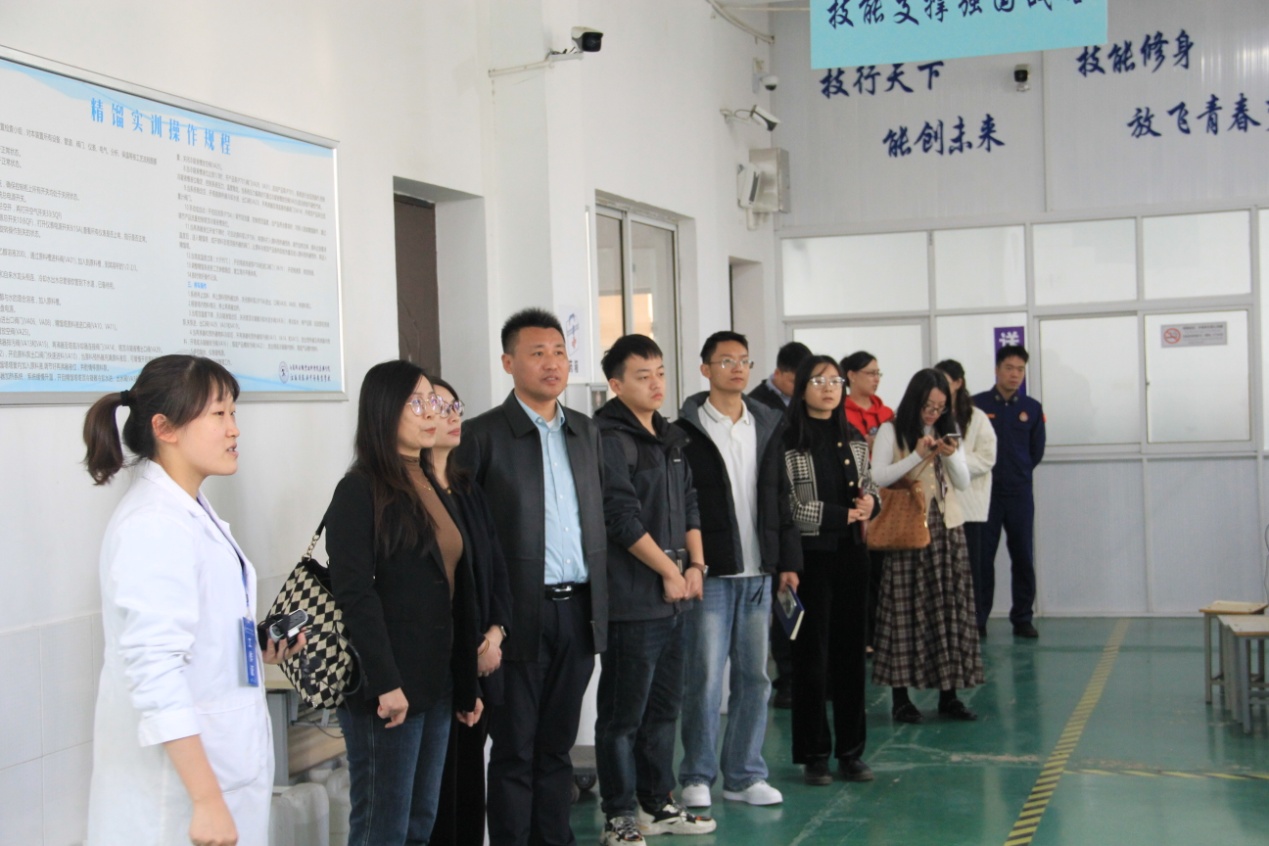
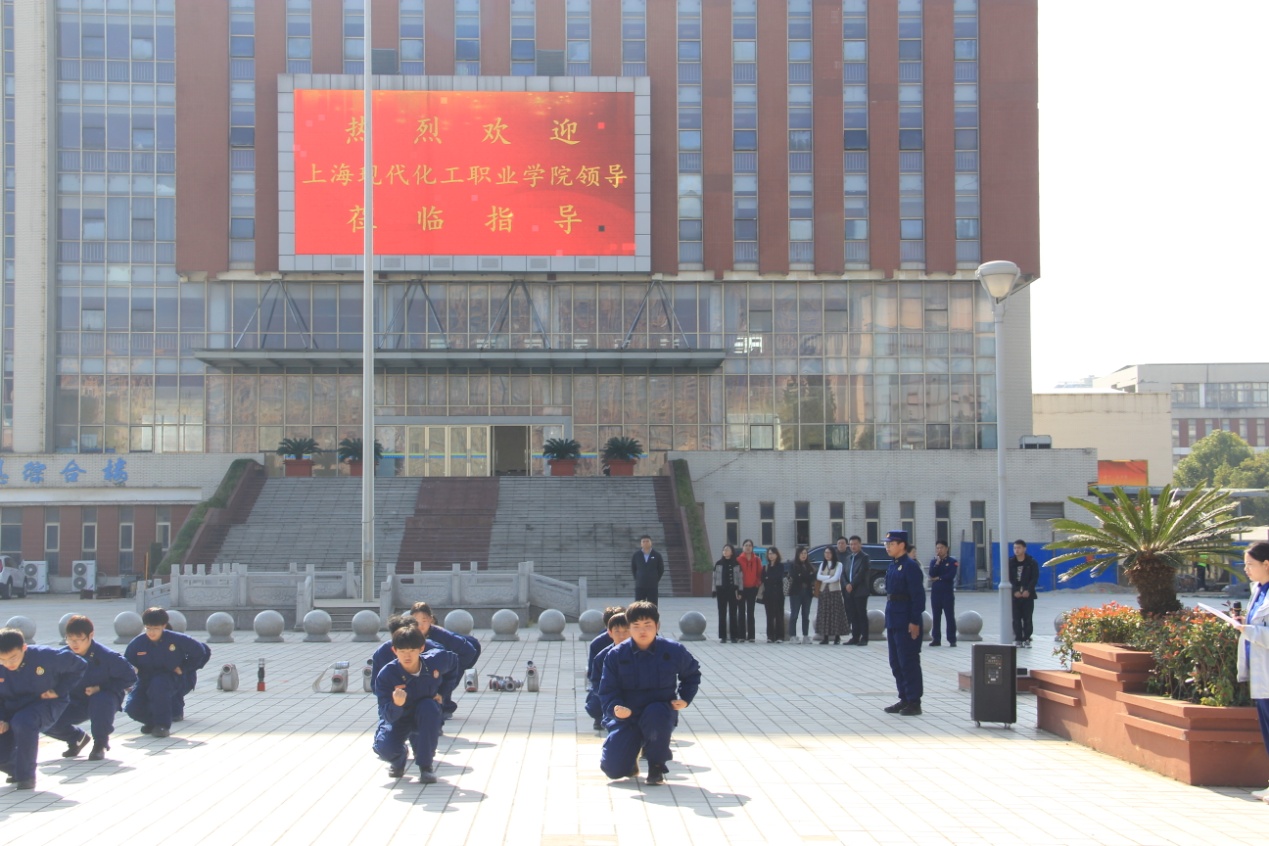
At the beginning of the activity, the two sides held a special symposium around the challenges and difficulties faced by the development of vocational education, and exchanged in-depth views on key issues such as the demand for talents in the industry, the optimization of curriculum system, and the improvement of practical teaching, and reached a number of cooperation consensus. After the symposium, the research team visited the chemical training center of the school and the emergency rescue training base jointly built by school and enterprises, and got a comprehensive understanding of the training site allocation standards, the setting of characteristic courses and the innovative practice of school-enterprise cooperation operation mode by observing practical drills, inspecting teaching facilities,etc.
This exchange not only further strengthened the communication between the two schools, but also consolidated the foundation of mutual trust. It also built an effective platform for the two sides to carry out deeper and wider cooperation in the fields of teacher sharing, resource exchange and cooperative education, and injected new energy into the high-quality development of vocational education.
In the afternoon, the research team went to Taixing Yimin Chemical Co., Ltd. to carry out on-the-spot research activities and explore the convergence point between the integration of production and education and industrial development.
At the symposium, the enterprise introduced in detail the emergency management measures in production and operation, the recruitment standards for talents and the core safety standards for ammonia production in the tank plant, which provided a fresh industrial perspective for the training of talents in the school. The two sides conducted in-depth discussions on key issues such as the optimization of personnel training scheme, the construction of internship and employment base, and collaborative innovation in Industry-University-Research, and reached a number of consensuses on supply and demand docking and resource sharing. After the symposium, the research team visited the core areas such as the tank plant, fire sprinkler system and central control room of the enterprise, and intuitively understood the production process, safety control system and technology application status of the enterprise through on-site inspection.
This field trip focused on the combination of enterprise employment demand and vocational education reform, and further clarified the development direction and reform path of safety, chemical industry, fire rescue and other disciplines. Taking this activity as an important opportunity, the research team will continue to deepen the connotation construction of the integration of production and education, promote the accurate docking and co-frequency resonance between the curriculum system and the industrial demand, and strive to cultivate more high-tech chemical talents and inject strong vocational education momentum into the high-quality development of the regional chemical industry.