
To further deepen industry-education integration and school-local government collaboration, and to precisely align with the development needs of the local cultural tourism and health & elderly care industries, our school has been optimizing its two major programs: Smart Tourism Technology Application and Smart Health and Elderly Care Service Management. On the morning of April 22, a delegation led by President Chen Xiaobin and Vice President Zhang Haixia visited Shihua Subdistrict, Jinshan for thematic research. Xia Lei, Director of Shihua Subdistrict Office, extended a warm welcome.
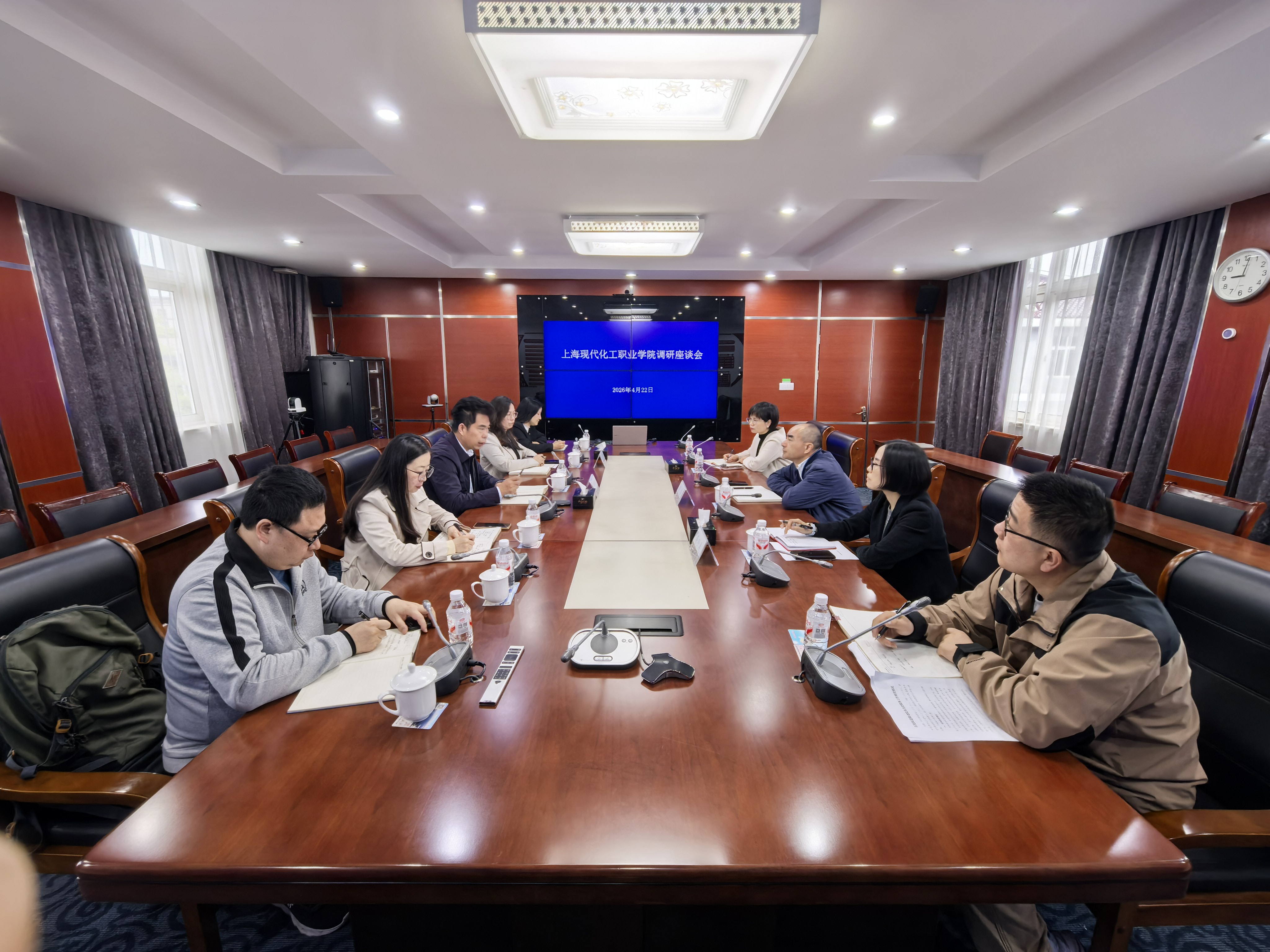
During the research, Xia Lei provided a detailed overview of the current development, spatial planning, and talent needs of the subdistrict in the fields of smart health and elderly care as well as tourism. He noted that the subdistrict is currently accelerating its regional smart transformation, focusing on addressing population aging and tapping into cultural tourism resources. As a result, there is an urgent demand for skilled technical professionals in these areas. He expressed the hope that this visit would serve as an opportunity to establish a long-term cooperation mechanism with our school, achieving mutual resource complementarity and win-win development.
Chen Xiaobin briefly introduced the school’s educational features, program layout, and development plans. He emphasized that the school adheres to the core philosophy of “designing programs around industries and tailoring talent cultivation to market needs,” actively integrating itself into the broader local economic and social development landscape. In cultivating applied technical professionals, the school is committed to bridging the gap between practical teaching and social needs — striving to “bring classrooms to the front line of grassroots communities” — so as to enhance the alignment between regional development demand and school talent cultivation and empower local industrial upgrading through high-quality education.
The two sides held in-depth discussions on key issues including program development, joint construction of off-campus training bases, faculty development, and student internships and employment, reaching multiple consensuses. They agreed to establish a regular communication mechanism, explore new models of government-school collaboration and industry-education integration, and align program development precisely with the industrial needs of the subdistrict. Shihua Subdistrict will be developed into a key internship and training base for the school, while the school will leverage its talent and strengths to help improve the quality and efficiency of the subdistrict’s smart development.
This research has further clarified the direction of program development, deepened the partnership between the school and the subdistrict, and laid a solid foundation for building practical teaching platforms and expanding talent cultivation pathways. Moving forward, our school will turn research outcomes into tangible results, continuously optimize program quality, deepen collaborative education between the school and local government, and inject more talent vitality into regional industrial development.