
On the afternoon of June 9, the kick-off meeting for the 2026 project “Multimodal Large Model-Driven Dynamic Construction and Early Warning of Personalized Enterprise Safety Profiles – Research and Application of Off-Site Supervision for Industrial and Trade Enterprises in Shanghai Bay Area” was held on the fourth floor of Houde Building. The project is one of the projects approved by the National Safety Vocational Education Teaching Steering Committee. Attendees included Wu Zhenke, Deputy Director of Jinshan Emergency Management Bureau, Wei Xinquan, Chairman of Shanghai Huagong Safety Technology Service Co., Ltd., Ye Guobin, Executive General Manager of Shanghai Huagong Safety Technology Service Co., Ltd., Gao Ju, Party Secretary of our school, Zhang Haixia, Vice President of our school, and Wu Zhenzhen, Dean of the School of Public Safety and Emergency Management. Key faculty members from the school also participated in the meeting.
Gao Ju emphasized that the research must reflect multi-stakeholder collaboration among government, enterprises, and the school, with the three participating enterprises serving as practical case studies. He stressed the need to enrich the theoretical foundation rooted in important principles regarding workplace safety, and to maintain a closed-loop system of “perception – prediction – risk elimination.” The system should cover data collection, analysis, early warning, and recommendation output, establish an automatic alert mechanism, explore the expansion of safety education and training functions, reasonably open data access, and establish mechanisms for active participation by enterprises and third parties.
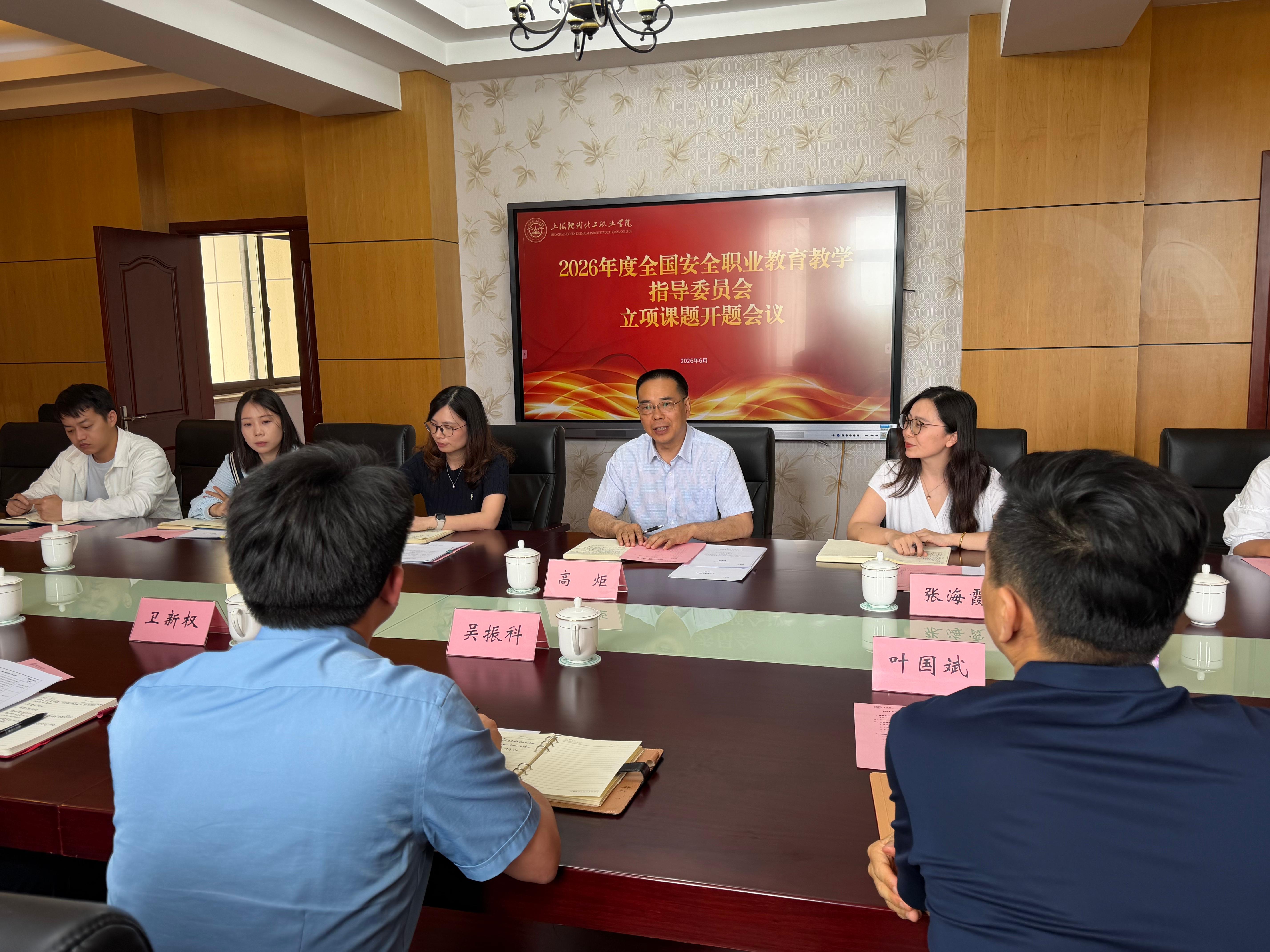
Vice President Zhang Haixia introduced the background of the project and relevant information about the school. Ye Guobin then presented the research foundation and core achievements of the safety profiling approach. Drawing on the six-dimensional “Human-Machine-Environment-Management-Performance” model from Changzhou and the integrated large-scale profiling system from Beijing’s Shunyi District, the project has established a four-dimensional framework of “Human-Machine-Environment-Management,” comprising 26 categories and 86 indicators. An enterprise safety analysis report has already been completed. Next steps include model optimization and intelligent analysis, expanding the three major application scenarios of government regulation, enterprise application, and school use, with the goal of completing the project by 2028. Wu Zhenzhen briefly introduced and assigned responsibilities for each phase of the project and the corresponding lead persons.
Wei Xinquan noted that considerable efforts have been made in the early stage, with careful selection of representative enterprises, and expressed hope for further discussions. Wu Zhenke observed that advanced foreign systems are costly and difficult for small and medium-sized enterprises in Jinshan to adopt. He recommended a principle of minimal or no disruption, using third-party on-site inspection data as the core input, presenting the final product in the form of a safety assessment report. An innovative distinction between inherent risk and actual risk should be made to avoid neglecting enterprises with high inherent risk, thereby providing a basis for enterprises’ safety investment decisions.
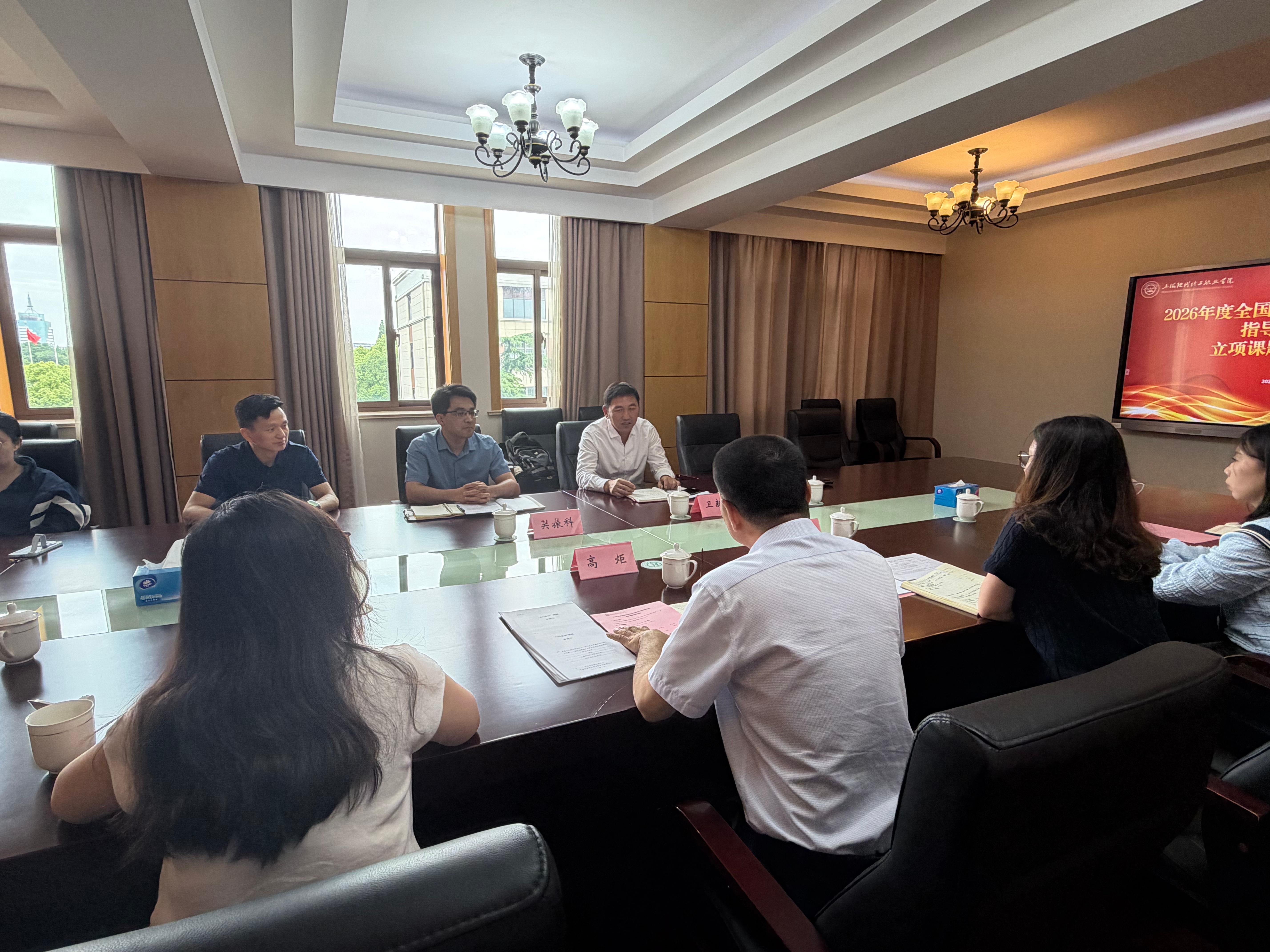
In the future, the project’s outcomes will deeply empower the three major scenarios of government supervision, enterprise application, and school use. The successful holding of this kick-off meeting has laid a solid foundation for government-enterprise-school collaboration in promoting intelligent supervision of workplace safety. The project team will actively incorporate feedback from all parties, refine the research plan, and strive to produce a set of highly transferable research results, contributing wisdom and strength to improving the safety governance level of the Shanghai Bay Area.