
On August 18, Vice Presidents Huang Hanjun and Zhang Haixia led a delegation to three key enterprises in Jinshan District for a field research visit aimed at assessing industry needs, understanding corporate talent demands, and reviewing student internship conditions. The visit also served to deepen school-enterprise cooperation and advance industry-education integration. They were accompanied by Shen Duan, Director of the Academic Affairs Office; Zhong Yachen, Deputy Director of the Enrollment and Employment Office; Liu Han, Deputy Dean of the School of Smart Industry (in planning); and Yan Rongrong, Deputy Dean of the School of Intelligent Manufacturing.
In the morning, the research team first visited Shanghai Huagong Safety Technology Service Co., Ltd. Accompanied by Executive General Manager Ye Guobin and HR Manager Wang Mingjie, the team toured the company’s office and training facilities, gaining an in-depth understanding of the company’s development history, core business, and workforce development. The two sides held extensive discussions on competency standards for safety technology service personnel, talent cultivation benchmarks, and career progression pathways, with a particular focus on the new requirements for practitioners’ knowledge structures and skill sets arising from emerging technologies and new industry formats.
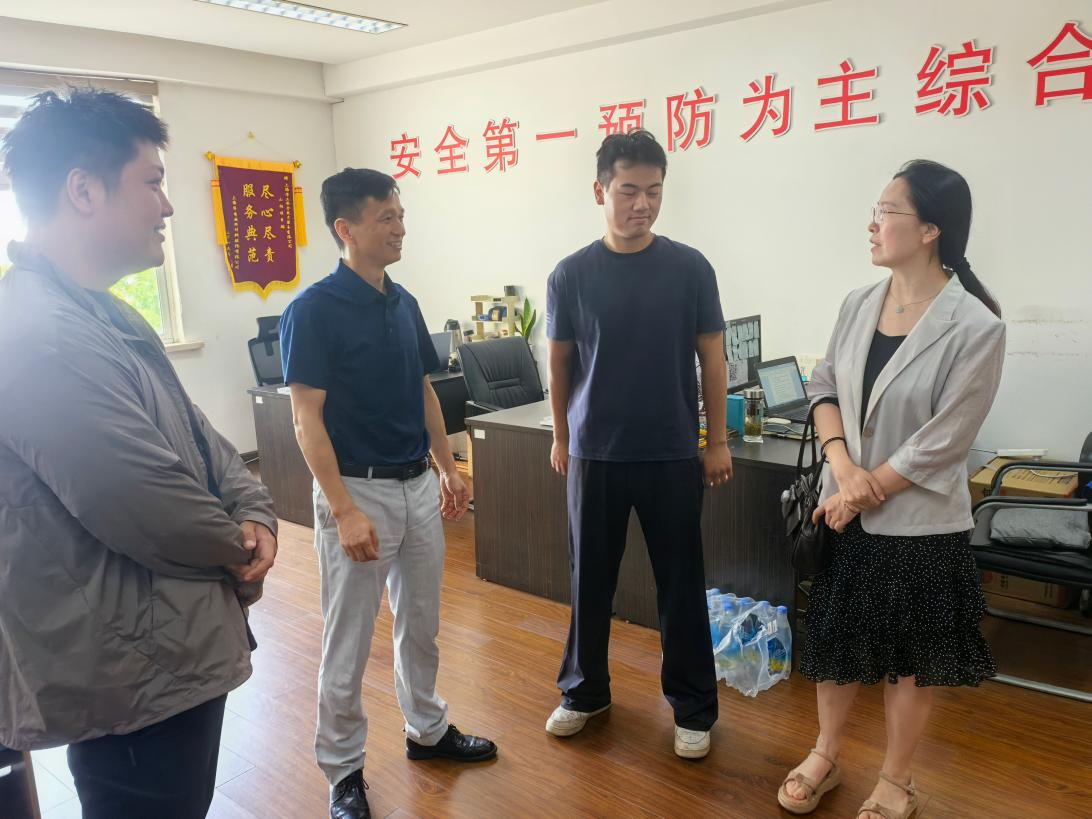
During the visit, the school leaders went to the interns’ workstations and had cordial conversations with the students. They inquired in detail about their work adaptation, learning progress, and daily life, encouraging them to cherish the internship opportunity and hone their skills through hands-on practice.
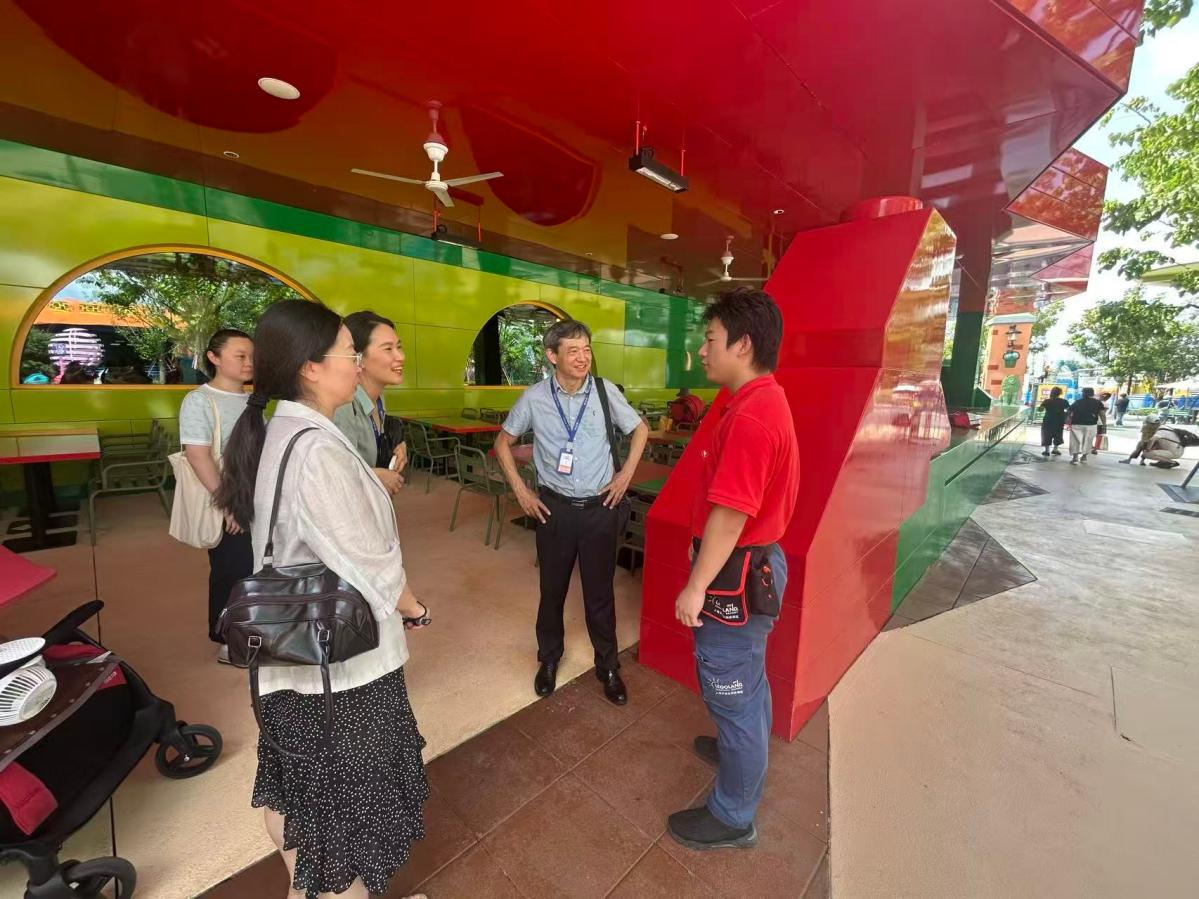
In the afternoon, the delegation traveled to Shanghai Legoland Resort, where they were received by HR Manager Zhou Qinqin. The team toured the resort’s operational areas, frontline posts, and training facilities to observe the business model, job configurations, and internship support provisions, while accurately identifying the company’s talent needs. During the walkthrough, the school leaders interacted warmly with student interns, carefully learning about their adaptation, work progress, and daily living conditions, and encouraging them to make the most of this practical experience to enhance their professional skills and work ethic in real-world settings.
A subsequent symposium was held between the two parties. Manager Zhou provided a detailed introduction to the resort’s service role standards, internship mentoring system, and annual recruitment plans, and highly commended the overall performance of our student interns, noting their positive attitude, strong adaptability, and well-rounded professionalism. The discussions covered the tailored cultivation of talent for smart tourism majors, phased internship management, on-the-job training implementation, and graduate employment.
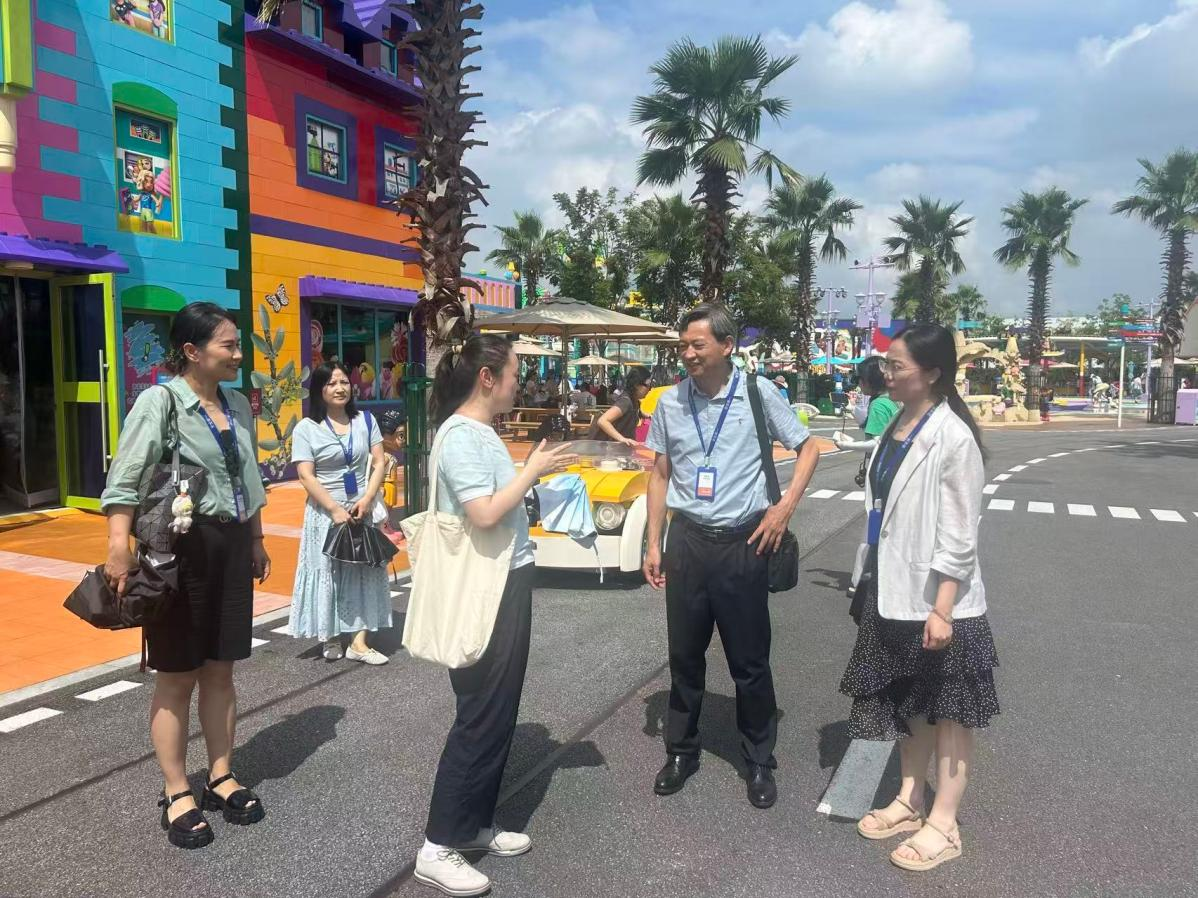
Both sides expressed their commitment to strengthening collaboration further. This includes refining the talent cultivation program for Smart Tourism Technology Application based on the actual needs of the cultural tourism industry, embedding authentic service scenarios and job skill standards into daily instruction; promoting ongoing exchanges between school faculty and corporate mentors, and jointly developing and sharing teaching resources to deepen industry-education integration; sustaining stable internship programs with a dual-mentor system and robust assessment mechanisms; and establishing regular employment liaison channels to ensure substantive and sustainable school-enterprise cooperation.
In the late afternoon, the research team visited Yipuji Integrated Equipment (Shanghai) Co., Ltd. for a special discussion on internship and employment. They were accompanied by HR Director Tian Zhuqin and colleagues from the production department.
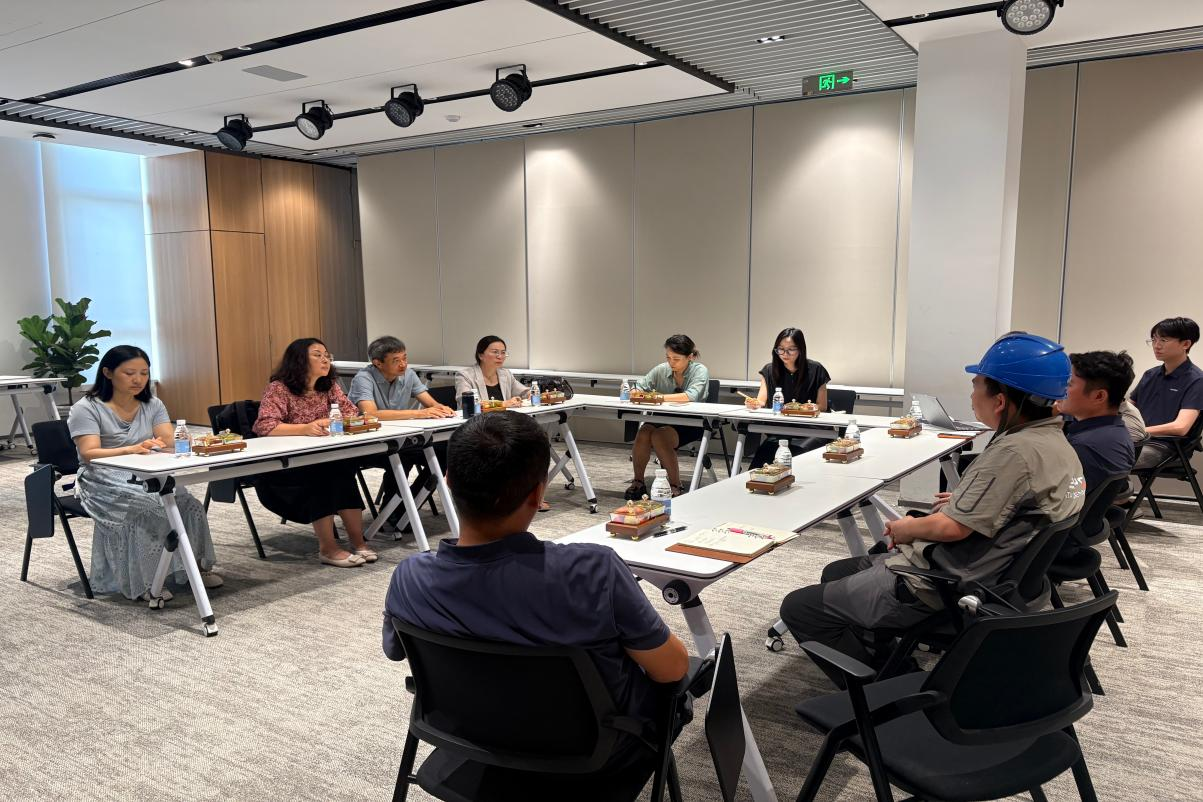
During the exchanges, the two sides had in-depth communication on the internship positions, student performance, and training outcomes of our students at the company. Currently, 12 of our students are interning at the enterprise, laying a solid foundation for further collaboration. Vice President Huang Hanjun stated that he hopes to take this opportunity to advance the establishment of the “231 Yipuji Order Class,” expand opportunities for faculty to gain practical experience at the company, and invite corporate technical mentors to teach on campus. By integrating real project cases, electrical blueprints, processing techniques, and tooling equipment into specialized course instruction, the program will not only better align students’ knowledge and skills with actual job requirements but also help on-campus faculty update their technical expertise and narrow the gap with cutting-edge industry technologies.
The two parties also exchanged views on internship duration, process management, performance evaluation, and collaborative school-enterprise oversight mechanisms. The delegation then visited the production workshops to observe the interns’ working environment firsthand.
This research visit is a concrete step taken by our school to implement the directives of the Municipal Education and Health Work Committee and the Municipal Education Commission, reaching out to industry frontlines to understand actual needs and deepen school-enterprise partnerships. Going forward, our school will systematically synthesize the findings from this visit, further optimize its program portfolio and talent cultivation plans, deepen industry-education integration and collaborative education, and continuously enhance the alignment between talent development and regional industrial development needs, thereby providing robust talent support for high-quality regional economic and social development.