
To further promote industry-education integration and school-enterprise cooperation, accurately align with talent demand in the chemical industry, and optimize the talent cultivation plan, a delegation led by Vice President Zhang Haixia of Shanghai Modern Chemical Industry Vocational College visited Sinopec Shanghai Research Institute of Petrochemical Technology Co., Ltd. on October 13 for exchange, visit, and discussion. The delegation included heads and faculty members from the International Exchange Office, Academic Affairs Office, School of Chemical Engineering, and Admissions and Employment Office. Peng Zhenlei, Director of the Organization Department of the CPC Committee and Manager of the Human Resources Department of the institute; Jin Yongming, Director of the Evaluation Center; Tang Zhiqin, Company Expert; and relevant supervisors and business specialists from the Human Resources Department attended the exchange.
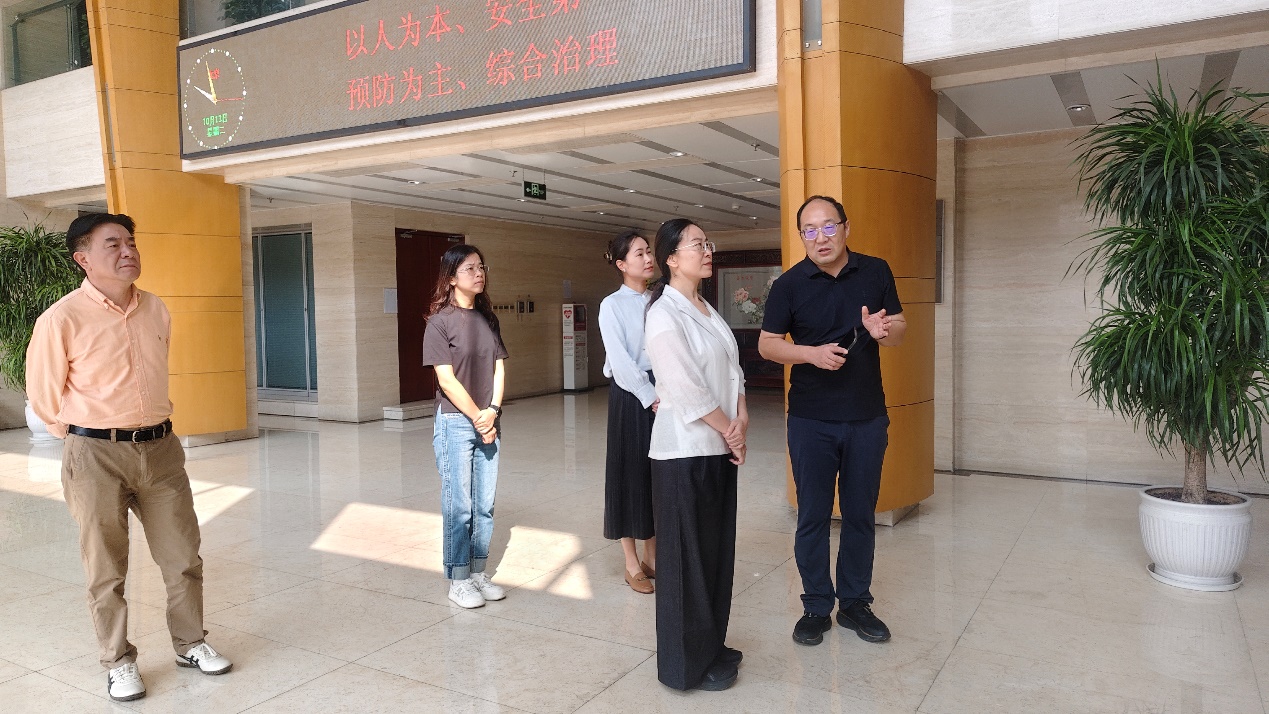
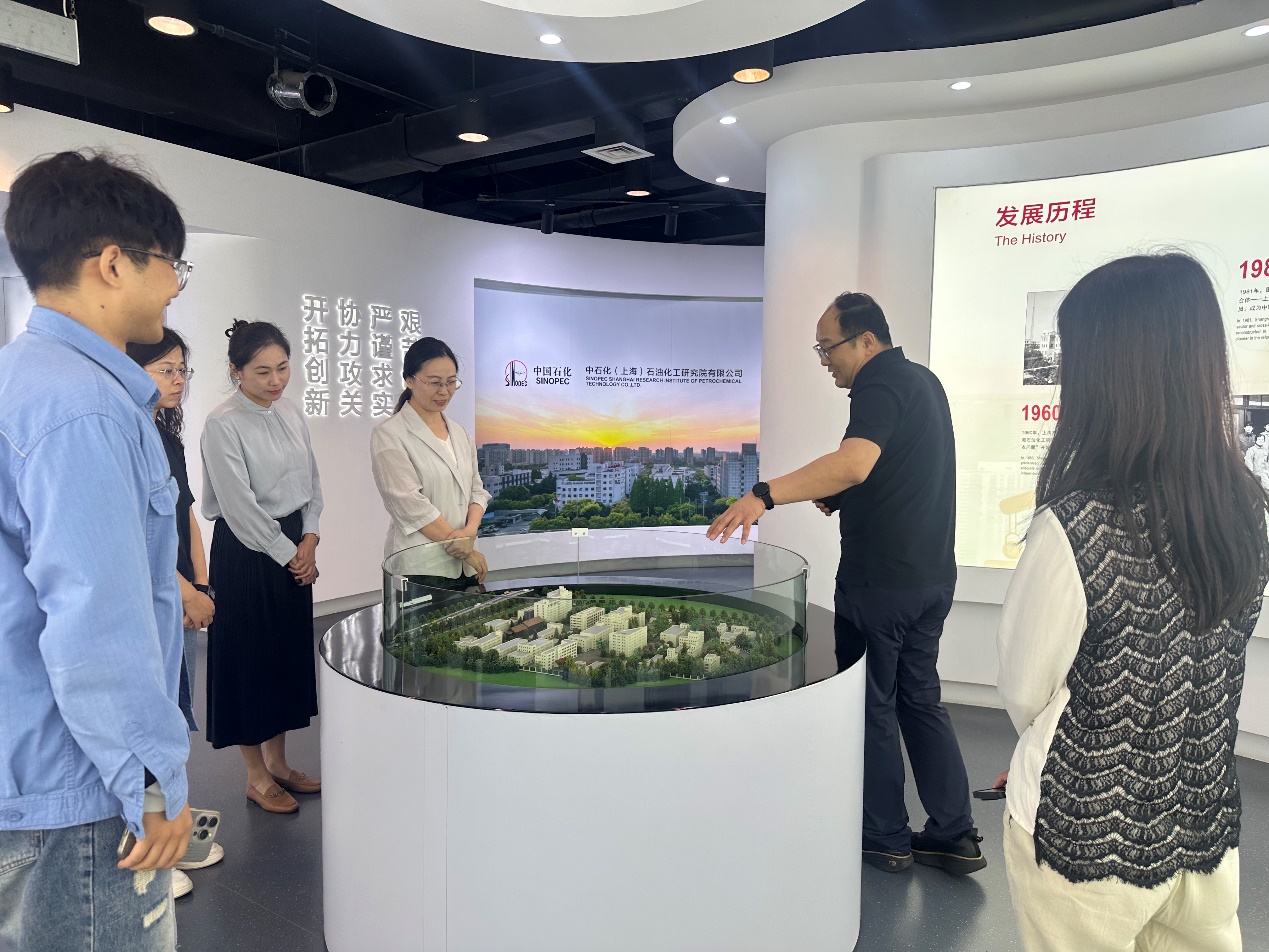
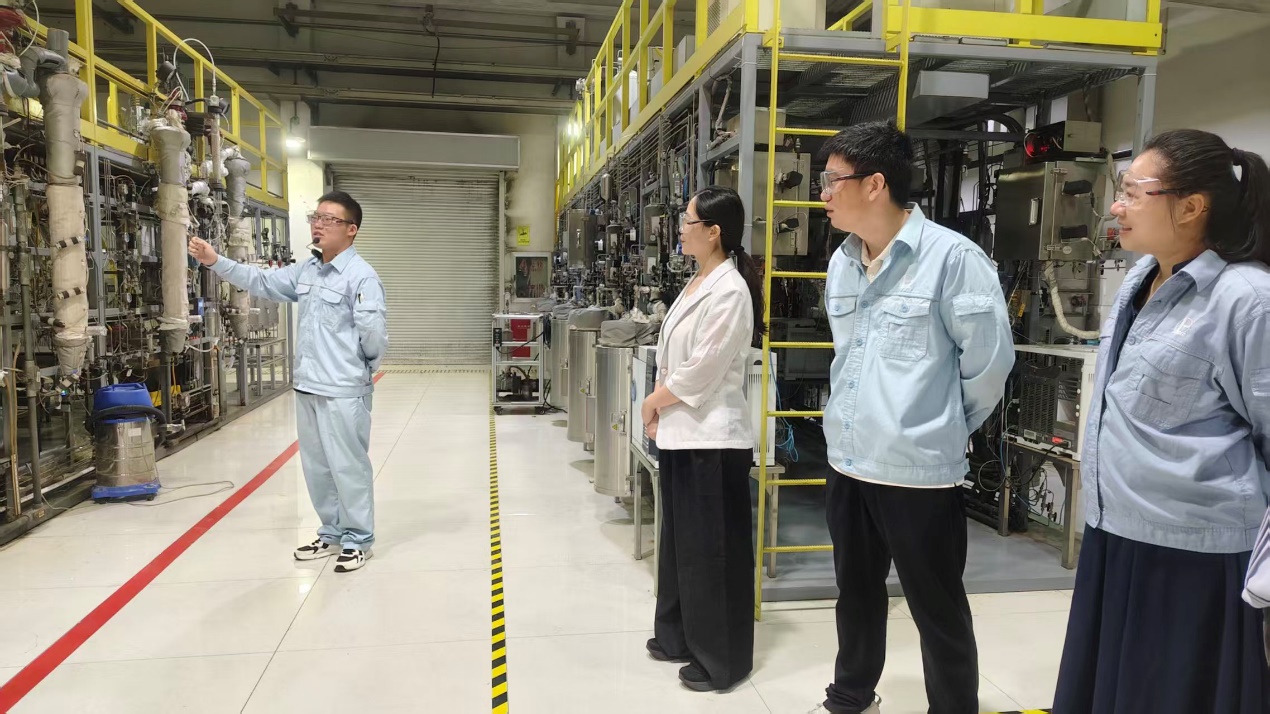
The delegation first visited the company exhibition hall. Peng Zhenlei gave a detailed introduction to the institute's development history, research directions, technological achievements, and industrial layout, enabling the delegation to gain an intuitive understanding of cutting-edge petrochemical research. The delegation then visited the Evaluation Center and the Robotic Molecular Sieve Synthesis Laboratory, where they observed advanced experimental equipment and automated R&D platforms up close and experienced the research and production scenarios arising from the digital and intelligent transformation of the petrochemical industry. The delegation showed great concern for the on-the-job development of five graduates from our school and learned in detail about their daily work. The students said that, under the careful guidance of their enterprise mentors, they had accumulated substantial frontline hands-on experience. Based on the overall performance of previous graduates, the company also put forward valuable suggestions for optimizing the school's talent cultivation plan.
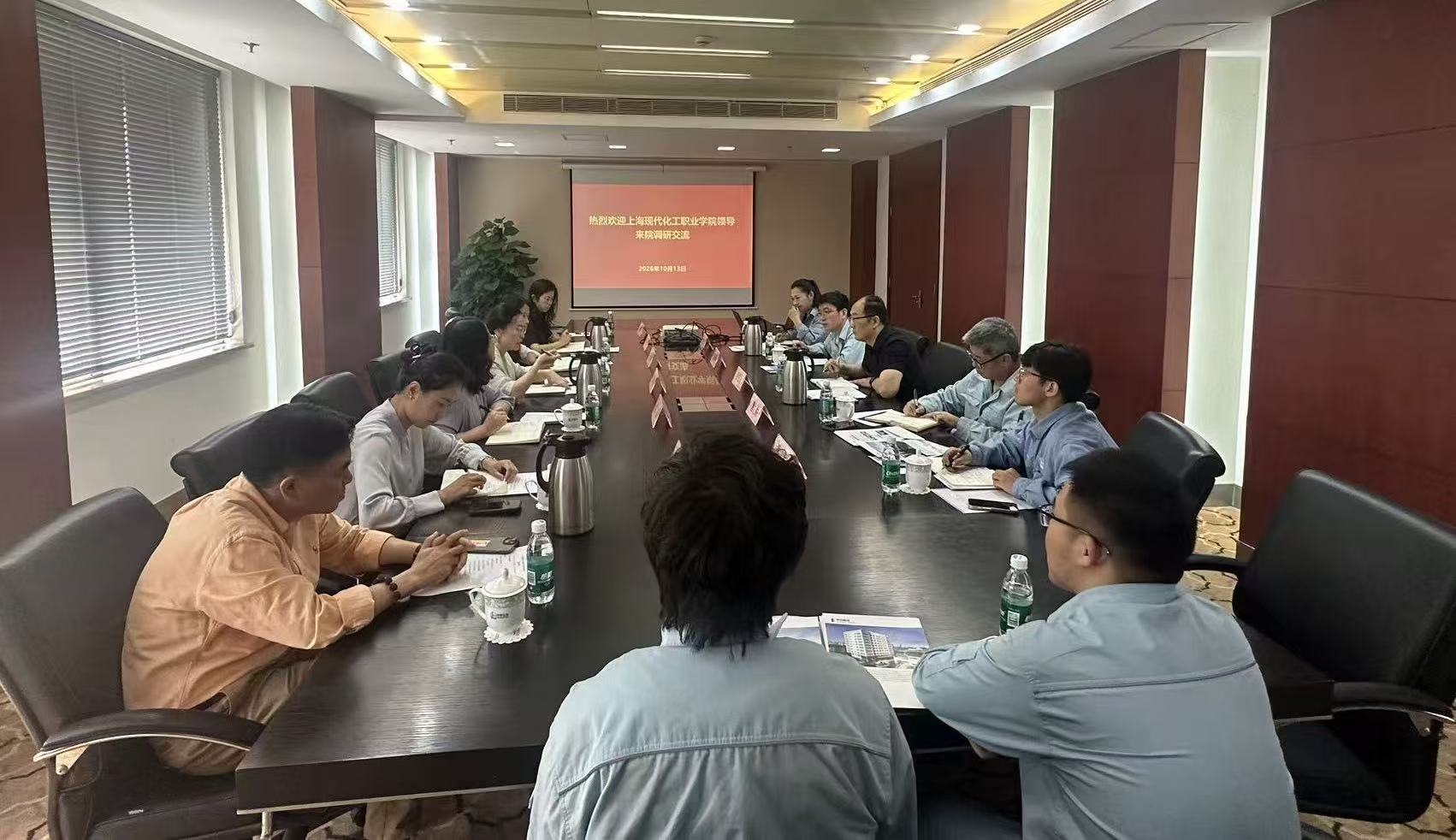
After the site visit, the two sides held an in-depth discussion in the conference room. They conducted full discussions on talent cultivation, order-based class development, curriculum development, student employment, internship and practical training, and faculty development. Based on job recruitment standards, the company proposed key directions for talent cultivation. First, attention should be paid to students' overall qualities, strengthening communication and expression, interpersonal skills, etc.; consolidating professional fundamentals; proficiently mastering the principles and practical operations of analytical methods such as gas chromatography and liquid chromatography; firmly establishing the HSE (Health, Safety, and Environment) safety concept; and developing scientific analytical thinking. Second, importance should be attached to resume writing and professional quality development, while also focusing on teaching content such as chemical safety and accident hazard identification to improve students' on-site practical skills. Third, the company's job requirements cover two directions—operational skills and management skills—and it needs qualified personnel such as chemical process control operators and analytical inspectors.
Regarding collaborative school-enterprise education, the two sides explored multiple cooperation paths: using the order-based class model to cultivate graduates in a targeted manner for enterprise positions; jointly developing customized courses and building a two-way training platform; inviting enterprise experts to teach at the school and arranging teachers to undertake on-the-job practice at the company; and carrying out targeted enterprise training focused on safety and job skills to open up the channel from student internship to employment.
Zhang Haixia expressed gratitude to Sinopec Shanghai Research Institute of Petrochemical Technology Co., Ltd. for its long-term support for the school's talent cultivation. She noted that the visit was highly rewarding and that the frontline job requirements and industry technology trends provided important references for the school's program development and curriculum reform. The school will continue to deepen school-enterprise cooperation with the institute, integrate enterprise job standards into the whole process of talent cultivation, optimize the curriculum system, strengthen faculty development, implement order-based class training, and enhance students' professional abilities and safety literacy, so as to deliver more high-quality technical and skilled talent to the petrochemical industry and achieve resource sharing, complementary advantages, and win-win cooperation.
This exchange and visit built a regular communication bridge between the school and the company and further clarified the approach to industry-education integration. Next, the school will implement the outcomes of the discussion, continue to advance collaborative school-enterprise education, continuously improve talent cultivation quality, and help promote the high-quality development of Shanghai's petrochemical industry.